"Is my child old enough?" We hear that question at the front desk more than any other.
Most kids can start jiu-jitsu at 3. Whether yours is ready depends on your child, and on what a class for their age looks like. Here's how we think about it at RMA.
A little about us first. Every kids class at RMA is taught by one of us, Professor Marcelo Ribeiro or Professor John Ribeiro. We don't hand kids classes off to lower-level coaches. Between us, we have more than 45 years of experience teaching kids, and over the years we've coached more than 10 IBJJF Kids Pan Am champions.
From Pee Wees up, every class follows a 16-week program we built ourselves and update every year. It's designed so that over the course of a year, students work through all the major positions in jiu-jitsu. (Mighty Mites have their own game-based classes, covered below.)

Ages 3–5: learning through play
Tournament medals can wait. At this age, the goal is a kid who can follow directions, take turns, roll forward without bumping their head and feel brave in a room full of new faces.
Our Mighty Mites classes are 30 minutes long and full of games. A typical class starts with a warm-up the kids think is just play (bear crawls, shrimping races, animal walks). Then they learn a simple technique or two, and finish with a game that sneaks that technique back in.
Kids leave sweaty and smiling. Most parents tell us the bigger change shows up at home. Their kids listen better and are more confident, and they're more aware of their bodies.
"Mighty Mites is hands-down the best! Professor John has the patience of a saint—wrangling 3 to 5-year-olds is not an easy task, but he does it with so much grace and composure. We are so lucky to have him!"
Signs your 3–5 year old is ready:
- They can stay with a group activity for 10–15 minutes
- They can follow a simple two-step direction ("touch the wall, then come sit on your spot")
- They're curious about moving and climbing (if they climb your couch, they're ready)
If your child is shy, that's normal. Plenty of confident kids spend their first class holding a parent's hand at the edge of the mat. Let them watch, then join when they're ready.
Ages 6–9: where a lot of kids get hooked

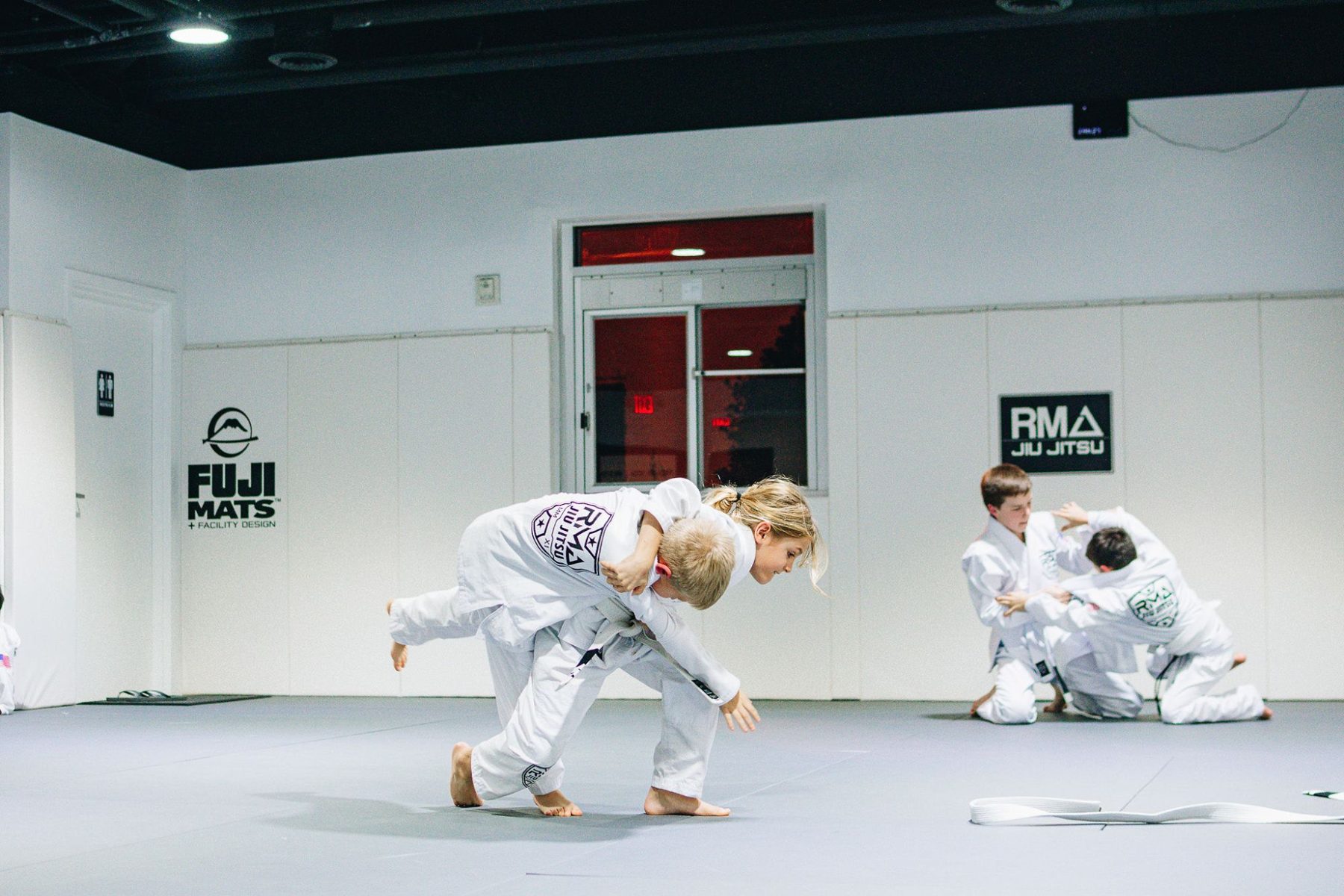
This is where a lot of kids fall in love with jiu-jitsu. In our Pee Wees classes, the drills get more structured, and kids start live training with partners their size under close supervision.
They learn to stay calm when someone is on top of them and how to escape. They also learn to control a partner without hurting them, and that part is a big deal. Jiu-jitsu teaches kids to handle conflict without striking. That's why so many parents choose it as their child's first martial art, and why it works so well for kids who are dealing with bullying.
You'll also start to see stripes and belts. Kids this age love having a clear next goal, and earning a stripe in front of their friends is a big moment.
Ages 10–13: ready for more
By 10, many kids are ready for more. Our Juniors classes move faster, go deeper into technique and include more live training.
We have a competition team for kids who want to compete, but competing isn't the focus of class. Kids who don't compete still get a serious workout and a group of friends who push each other.
This is also the age when you start to see jiu-jitsu build character. Showing up when it's hard. Tapping, then trying again. Shaking hands after losing a round. Those habits carry over into school and sports, and into home life too.
"This is an amazing school. My son started at almost 3 — he is 9 now and is very confident. He loves to train and compete. Not all schools are the same. They are amazing with the kids."
How kids belts work
Every promotion at RMA follows the rules of the IBJJF (International Brazilian Jiu-Jitsu Federation), including their minimum age for each belt.

Every child starts at white belt. From there, the IBJJF kids belts come in four colors, and each color has three steps: white stripe, solid, then black stripe.
| Belt color | Youngest age allowed |
|---|---|
| Grey (grey/white, grey, grey/black) | 4 |
| Yellow (yellow/white, yellow, yellow/black) | 7 |
| Orange (orange/white, orange, orange/black) | 10 |
| Green (green/white, green, green/black) | 13 |
Kids also earn stripes on their belt between promotions. The IBJJF doesn't set a minimum amount of time a kid has to spend at each kids belt. At RMA, kids average about one year per belt. At 16, students move into the adult belt system: grey, yellow and orange belts become blue belts, and green belts become blue or purple belts, at the professor's decision.
What about teens?
Teens 14 and up train in our beginner and advanced teen and adult classes, with coaching matched to their age, size and experience. It's never too late to start as a teen. Plenty of strong grapplers walk in for the first time in high school.
"My child has never done a sport. Is that a problem?"
Not at all. Jiu-jitsu is one of the few activities where kids who aren't the fastest or the biggest can thrive. Technique beats size, and kids figure that out quickly. We see quiet kids find their voice and high-energy kids find their focus.
How to know if it's right for your family
Try a free trial class. We'll lend your child a gi, and a coach will make them feel welcome while they get a real taste of class. Parents can watch at both of our academies, so you'll see exactly how it goes.
A few tips for the first class:
- Fill out the waiver online before you come
- Arrive 10 minutes early so your child can see the room before it fills up
- Bring a water bottle
- Skip the pep talk. Let them experience it, then ask what their favorite part was on the drive home
Both academies run kids classes all week, and one membership covers both locations. See the kids schedule and book a free class at RMA Westhaven in Franklin or RMA Nolensville.
Quick answers
What's the youngest age you accept? 3 years old, in our Mighty Mites program (ages 3–5).
Who teaches the kids classes? Professor Marcelo Ribeiro or Professor John Ribeiro, every class.
Is jiu-jitsu safe for young kids? Yes. Kids train with partners their size while a coach watches, and they learn to tap (the signal to stop) from day one. There's no striking.
Can I watch my child's class? Yes, at both our Nolensville and Westhaven academies.
Do siblings train together? Often, yes, when their age groups line up. Ask us at your trial class and we'll help you find the easiest schedule.
What should my child wear? Comfortable athletic clothes for the trial. We'll lend a gi.